
Reporting · Captured
Captured: One Year of Rebuilding, in Stills
A visual essay documenting a year of rebuilding after the Pacific Palisades fire.
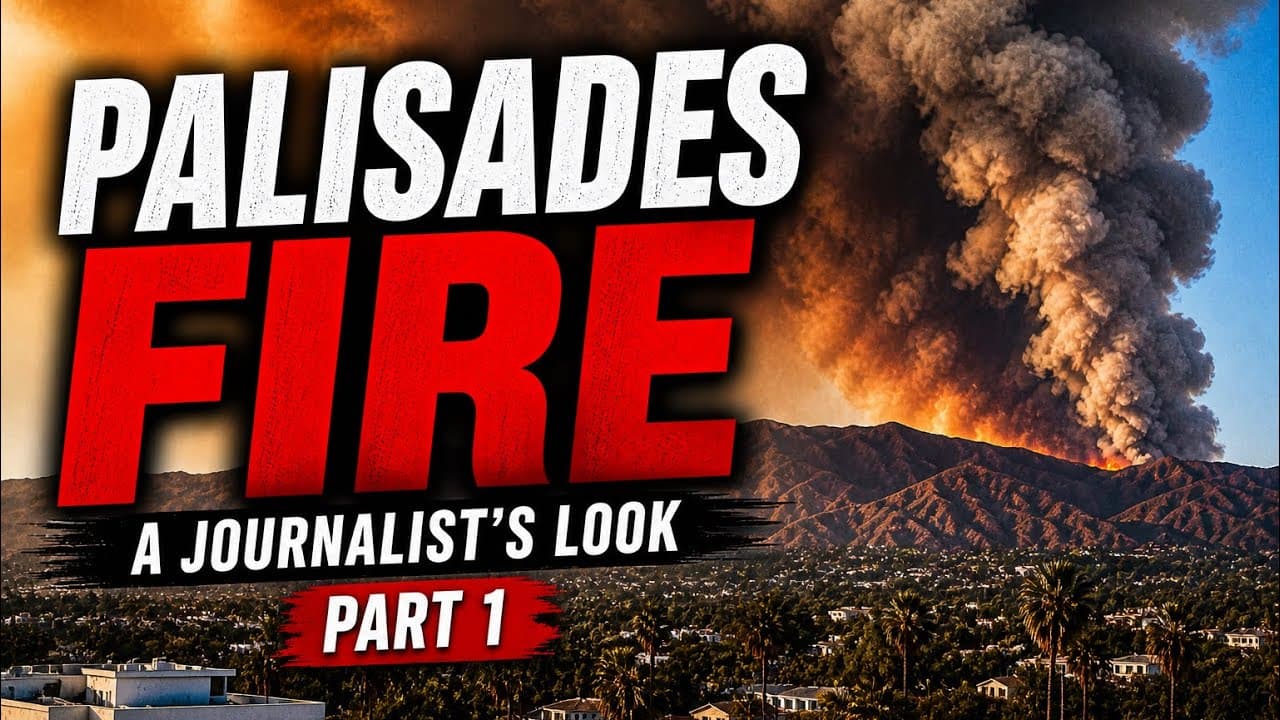
Journalism: Pacific Palisades Fire — Truth Computing Media — YouTube
A year after fire moved through Pacific Palisades, the landscape is no longer frozen in the immediate aftermath.
Empty lots have become construction sites. New framing rises beside properties that remain untouched. Utility crews, contractors, architects and residents now occupy streets that, in the first weeks after the fire, were defined by debris removal and restricted access.
Recovery is visible. It is also uneven.
The Palisades Fire began in January 2025 and destroyed or severely damaged thousands of homes in and around Pacific Palisades. The first city rebuilding permit was issued on March 5, 2025, 57 days after the fire began. By November, Los Angeles officials said more than 340 rebuilding projects had begun construction in Pacific Palisades, and the first rebuilt home received a certificate of occupancy later that month.
But a completed house is only one measure of recovery.
For many residents, rebuilding has meant months of decisions about insurance, financing, architecture, permitting and whether returning is financially possible at all. By April 2026, applications had been filed to rebuild only about a third of the dwellings destroyed in Pacific Palisades, according to a Los Angeles Times analysis. At that point, 867 homes had received permits and seven had been completed.
The city has tried to shorten that process. Emergency orders created expedited review paths, reduced some permit requirements and established dedicated rebuilding centers. Los Angeles now maintains a Palisades permitting and inspections center inside the community, while the city's broader recovery plan focuses on housing, infrastructure, commercial areas and long-term wildfire resilience.
The photographs in this essay are not intended to summarize the recovery through a single number. They show something narrower: what change looks like from the street.
January 2025 — the immediate aftermath. Blocks that once held houses are reduced to foundations, chimneys and fragments of walls. Streets remain lined with emergency equipment. The scale of loss is easiest to understand not from above, but from one property after another.
Spring 2025 — debris removal begins to change the visual character of the neighborhood. Where burned structures once stood, cleared lots expose the shape of individual parcels. The absence becomes cleaner but no less visible. At the same time, the first rebuilding permits begin moving through the city; Los Angeles officials say the first permit was issued in early March.
Summer 2025 — construction starts to appear alongside empty lots. New foundations, lumber deliveries and temporary fencing become part of the streetscape. By July, city officials said more than 85% of residential properties destroyed within the City of Los Angeles portion of the Palisades Fire had completed debris clearance and received final signoff. Nearly 300 rebuilding plans had been approved. But progress remains highly individual — one property may have active construction while the lot next door remains vacant.
Fall 2025 — the rebuilding process becomes more visible. Framing rises. Contractors move between multiple sites. The neighborhood begins to contain both the architecture of what was lost and the architecture of what will replace it. By November, city officials reported more than 340 projects had started construction. Later that month, the first rebuilt residence received a certificate of occupancy.
Winter 2026 — one year later, Pacific Palisades exists in several stages at once. Some families have returned. Some homes are being rebuilt. Some properties are still waiting on plans, financing or decisions about whether rebuilding makes sense. The community is therefore difficult to describe with a single word like "recovered." It is recovering, and that distinction matters.
Reconstruction after a disaster is not a clean transition from destruction to completion. It is a long period in which ordinary life, bureaucracy, construction and memory occupy the same blocks. These images document that period — not the end of the fire, but what came after it.
Show the evidence+
In development — this piece has not yet completed our verification process. Treat it as illustrative of the site's structure, not as published, verified reporting.
Sources
- Los Angeles Mayor's Office: Emergency executive order suspending collection of rebuilding fees for Palisades residents. Link
- Los Angeles Mayor's Office: New executive actions to further streamline Palisades rebuilding. Link
- Los Angeles Mayor's Office: First approvals under the new Standard Plan pilot program. Link
- Los Angeles Times: Reporting on rebuilding applications and permit timelines in Altadena and Pacific Palisades. Link
- LA Strong: Return & Rebuild: City of Los Angeles rebuilding resources and recovery plan. Link
- Site visits: Truth Computing Media photography and field documentation from Pacific Palisades, January 2025 through March 2026.
Method
Original photography taken on location, sequenced with reporting captions.
Related Reporting
Reporting · California on Fire
The First 72 Hours: Inside the Pacific Palisades Fire
Ground-level footage and firsthand accounts from the earliest hours of the fire.
Mark Yesubalen Torre · Pacific Palisades, California · May 27, 2025